

Top 5 Containerization Tools for AI Models
Compare the top five containerization tools for GPU-accelerated AI, covering GPU support, scalability, integrations, and security.
Updates, guides, and insights
Showing
169 posts found for 'models'
Compare the top five containerization tools for GPU-accelerated AI, covering GPU support, scalability, integrations, and security.

Compare ARM and x86 for AI workloads — ARM for energy-efficient edge inference; x86 for high-performance training and GPU-heavy tasks.

Retry transient errors with backoff, monitor tokens/latency, and secure access to reduce Azure OpenAI API failures and costs.

Clear, practical steps to identify, document, and report AI-generated deepfakes, copyright abuse, and nonconsensual content.

Compare five top AI weather models: architectures, speed, accuracy, and specialized uses for storms, cyclones, air quality, and waves.

One AI fuels creative lesson design; the other streamlines research and Google Workspace workflows.

Five async techniques—gather, as_completed, semaphores, async RLHF, and batch inference—to cut AI latency and scale LLM workloads.

Guide to adversarial regularization: min-max training, FGSM vs PGD, implementation tips, trade-offs, and best practices for robust models.
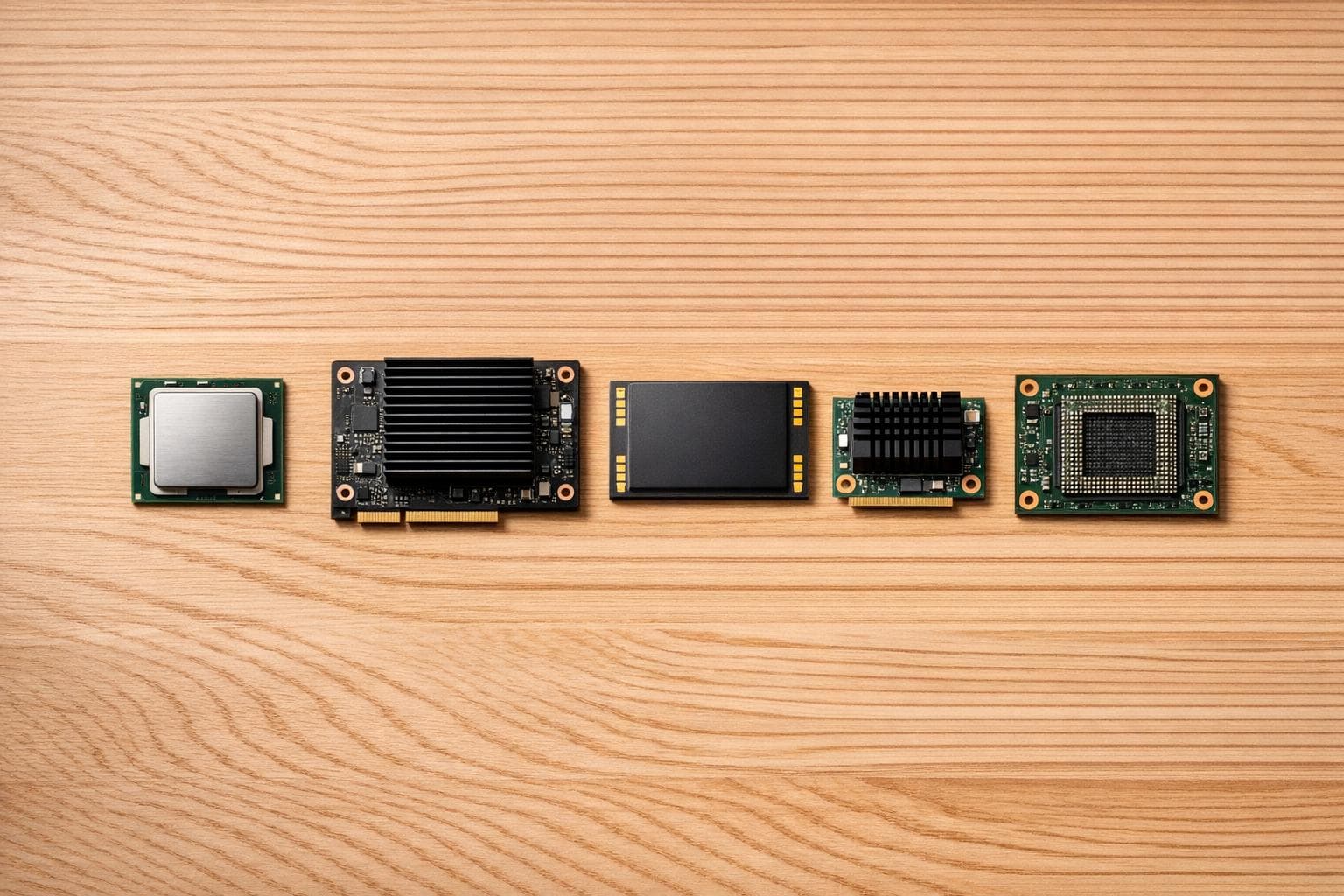
Compare CPUs, GPUs, TPUs, NPUs and FPGAs to choose the best hardware for AI training, inference, cost, and energy efficiency.

How self-, cross-, and joint-attention power Stable Diffusion, plus efficiency trade-offs and advances for high-res image generation.