
Qwen Image 3 Review: Text Rendering, Infographics, and Image Editing
We tested Qwen Image 3 on bilingual poster text, a dense infographic, photorealistic detail, and a controlled edit. See the actual outputs and where it still slips.
Updates, guides, and insights
Showing
We tested Qwen Image 3 on bilingual poster text, a dense infographic, photorealistic detail, and a controlled edit. See the actual outputs and where it still slips.
A practical way to compare AI voices for narration, assistants, characters, ads, and multilingual speech using previews and a repeatable audition script.
We tested Ling 3.0 Flash and Ling 3.0 Flash Thinking on coding, extraction, tool use, counting, and logic. See where their results differed and what Thinking cost.
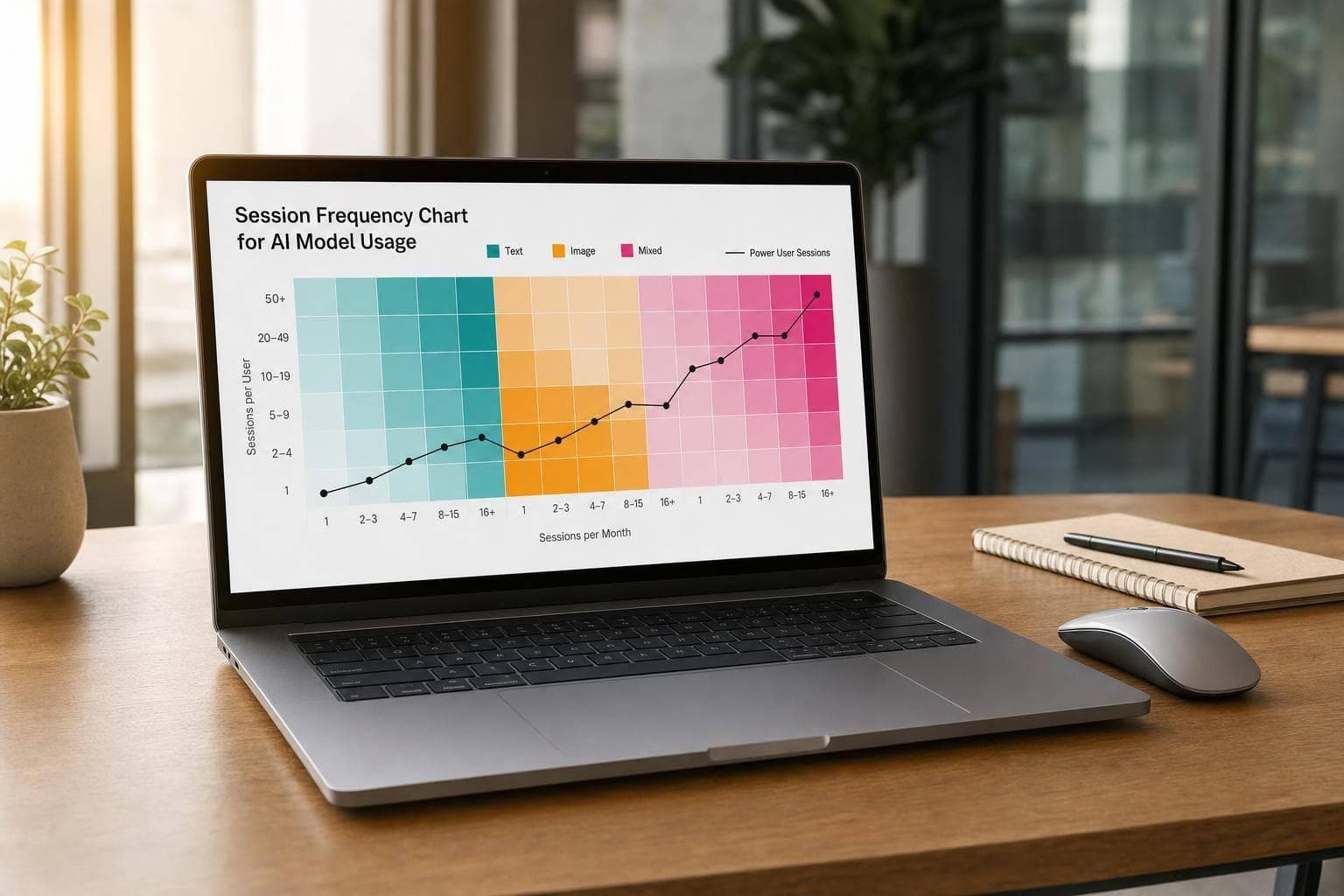
Build and read a session frequency chart to spot retention gaps across text, image, and mixed AI workflows and track power-user trends.
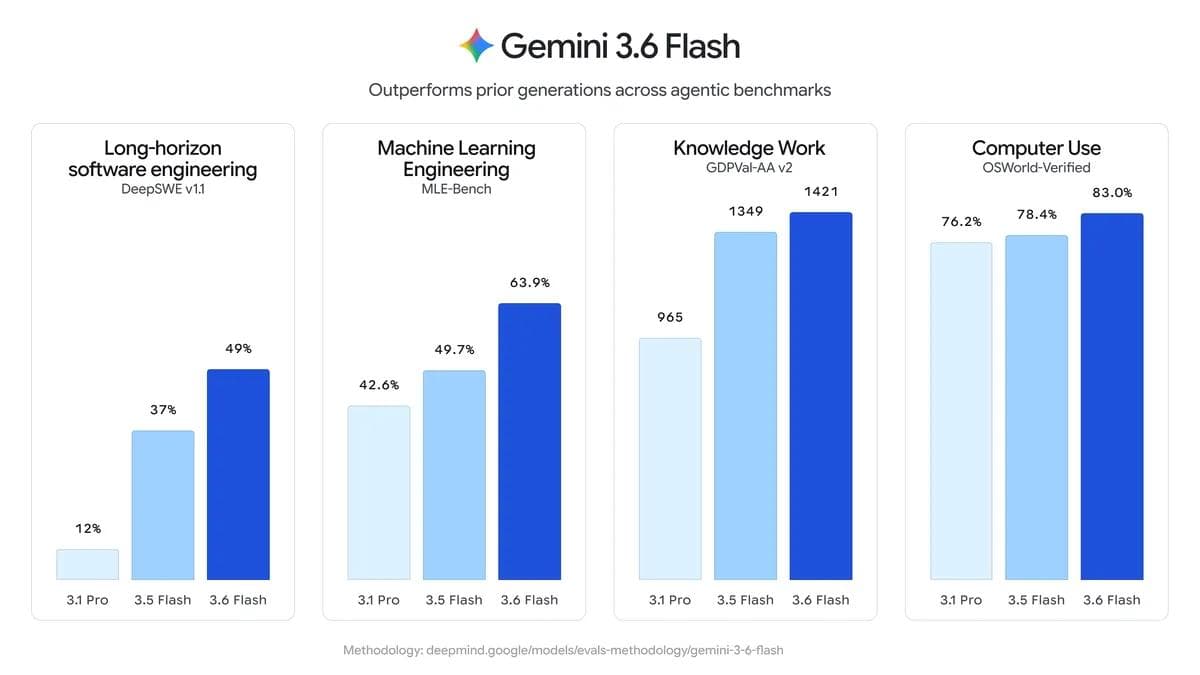
Compare Gemini 3.6 Flash and Gemini 3.5 Flash Lite on benchmarks, speed, pricing, context, coding, research, and high-volume work.
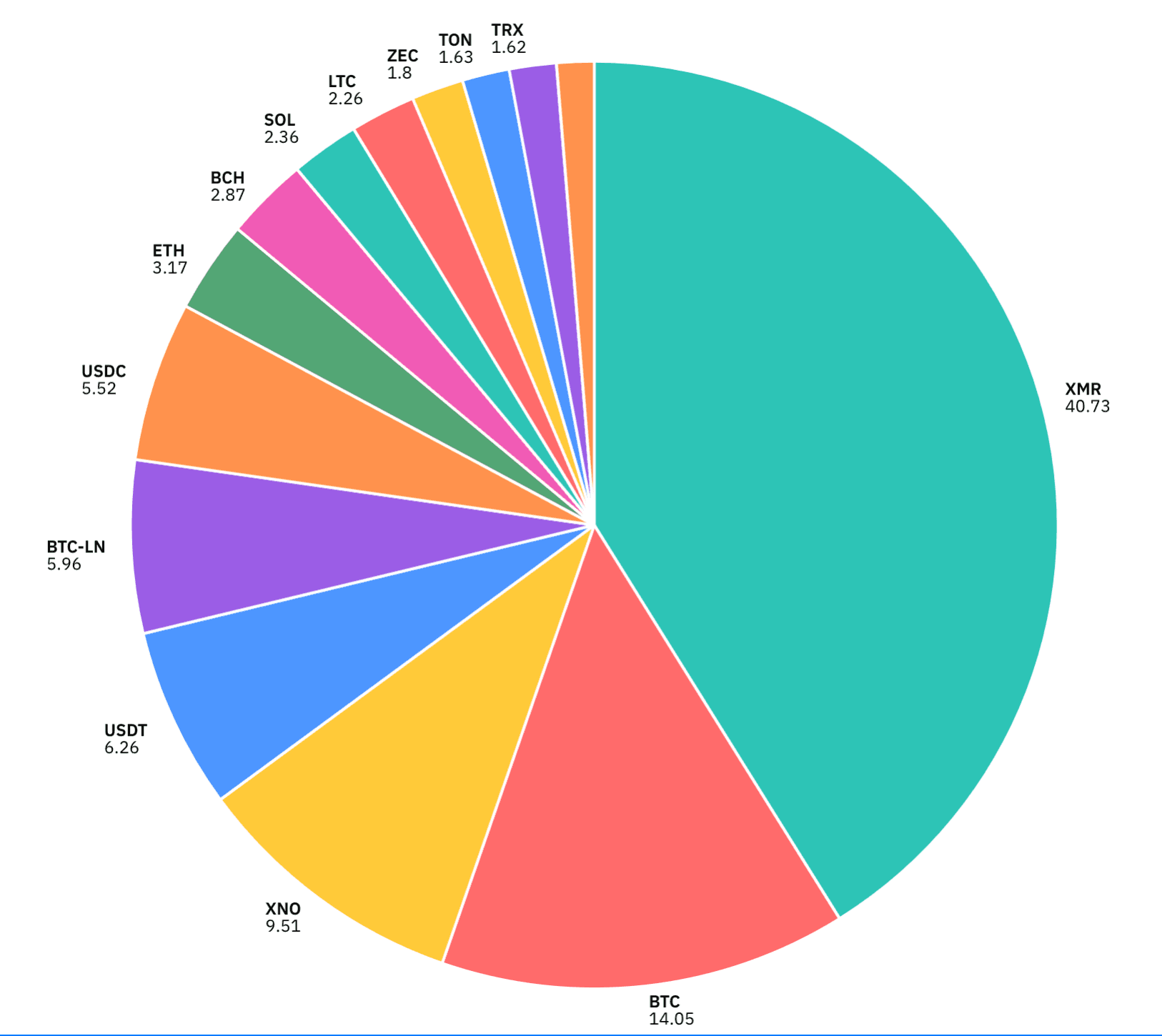
NanoGPT's first-half 2026 crypto payment data across XMR, XNO, BTC, Lightning, USDC, USDT, LTC, ZEC, ETH, SOL, TON, and more.
June 2026 NanoGPT crypto deposit data, with Monero at 40.73%, Bitcoin second, Nano third, and stablecoins at 11.78% combined.
A complete roundup of what NanoGPT shipped in June 2026, including Private Mode improvements, Sign in with NanoGPT, Batch API expansion, new models, media tools, payment updates, privacy controls, and community projects.
DeepSeek V4 Flash, GLM 5.2, MiniMax M3, and Nemotron 3 Ultra show why open-weight models now deserve first-round testing for coding, long-context work, agents, and enterprise workflows on NanoGPT.
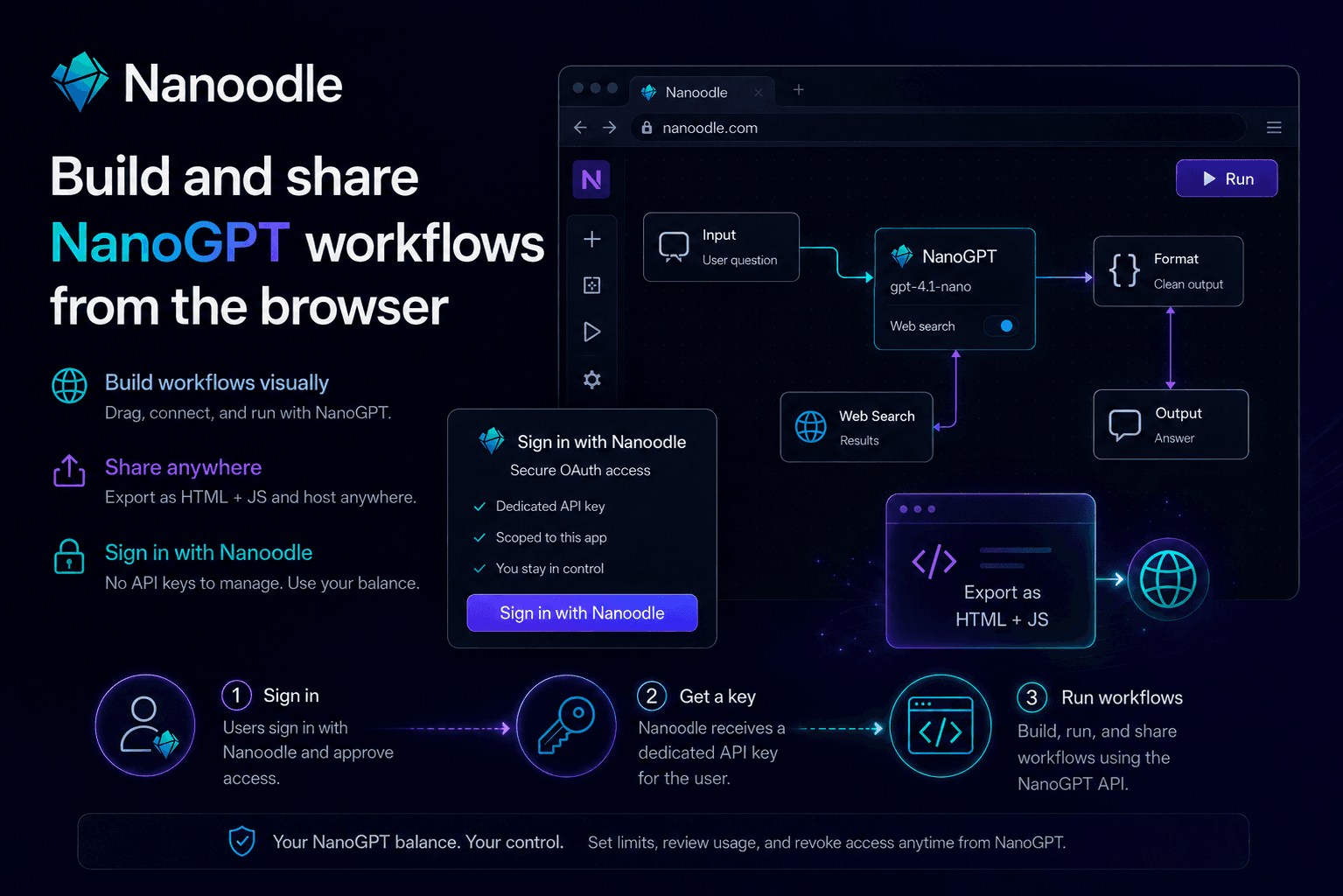
Nanoodle lets you share NanoGPT workflows that users can open, sign in to, and run with their own NanoGPT balance.